The Dardanelles Campaign
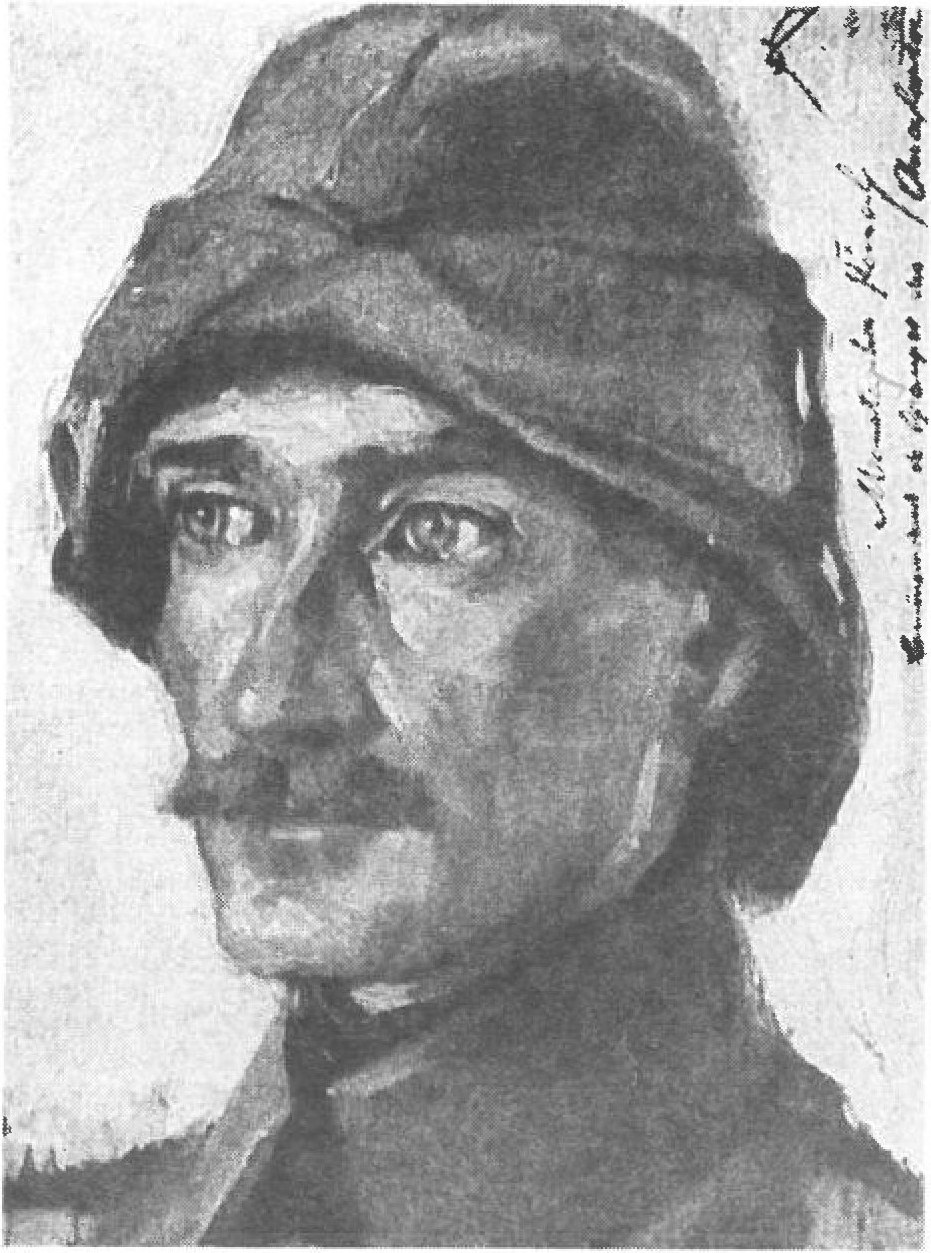
The Dardanelles victory restored the Turkish nation, which was regarded as practically dead, her former honour, glory and sense of self-respect.
Background and Ottoman Policy
Making the maintenance of the territorial integrity of the Ottoman Empire the basis of her traditional Middle Eastern policy, with a view to protecting the Mediterranean sea route, England had come to the conclusion even before the outbreak of World War I that the Ottoman Empire had had its day, and that time was ripe to dismember her. France pursued a similar policy for the same reasons. The Russian Czars, on the other hand, desired to establish footholds on warm seas and control the international trade routes. They thought they could reach their objectives by possessing the Turkish Straits.
Concerned with German expansion and desirous to check it, England and France sought the aid of Russia, and decided to give the Straits and parts of Anatolia as concessions to her in return for her collaboration. It was for this reason that Czar Alexander II, who ruled Russia at the time of the outbreak of World War I, welcomed the war enthusiastically declaring that it was “Russia’s war; a war through which her dreams would turn to reality.” This was the ambitious policy which led to the creation of the Triple Entente.
The Ottoman Empire was planning to join the Triple Entente, providing her borders were guaranteed and the capitulations (the concessions granted by the Ottoman State to the European States) lifted. Great Britain, unwilling to bind herself with new alliances, rejected the Ottoman proposals, while France notified the Ottoman Government that she would not consent to such an alliance unless Russia approved of it.
Under these circumstances there was only one choice left for the Ottoman Empire: to approach the group of powers which had formed what was then known as Der Dreibund (the Triple Alliance), i.e., Germany, Austria-Hungary and Italy. Negotiations with Germany led to the conclusion of an agreement on 2nd August 1914. Thus, the destiny of the Ottoman Empire was tied up to that of the members of the Triple Alliance.
Ottoman Neutrality and Entry into War
The Ottoman Government declared mobilization on 2nd and 3rd August 1914, and assumed the state of armed neutrality. It closed the straits of Bosphorus and Dardanelles for the passage of the warships of foreign powers. In the meantime, Italy declared her neutrality. With the declaration of war by Austria-Hungary on Serbia, Russia and France declared mobilization. When Germany failed to receive a favourable reply to the notes she sent to these two states demanding that they cease their military preparations, she declared war on Russia on 1st August 1914, and France on 3rd August 1914.
The two German warships, the Goeben, a heavy battle-cruiser, and the Breslau, a light battle-cruiser, appeared before the entrance of the Dardanelles on 10th August 1914, and requested permission of passage to the Sea of Marmora. The ships were allowed to go through by a permission which had already been obtained from the Ottoman Government. Being in a state of armed neutrality, the Ottoman Empire would not keep these warships long in her territorial waters. Units of the British navy reached the entrance of the Dardanelles on 11th August. A solution had to be found; and a solution was, indeed, found: the two warships were purchased by the Ottoman Government.
The German assault on France was halted. The English troops, which completed their training in the colonies, were moving to the European theatre. The pressure of the Russian Army on Austria-Hungary was increasing. It was believed that with the entry of the Ottoman Empire into the war the pressures of the British and Russian Armies would be diverted on the Ottoman Empire, thus relieving the burden of the members of the Triple Alliance.
The Turkish fleet and the two new warships under the command of Admiral Souchon sailed through the Bosphorus into the Black Sea on 27th October 1914, and was engaged with the Russian fleet on 29th October. The Turkish ships bombarded the ports of Sevastopol, Odessa, Feodosia and Novorossiisk during this operation. With this operation, which is known as the “Black Sea Incident” in Ottoman history, Russia had at last found a pretext to declare war on the Ottoman Empire on 3rd November, 1914. Great Britain and France followed suit. Thus finding herself at war, the Ottoman Empire declared war on 11th November 1914, and Cihad-ı Ekber (Holy War) on 14th November 1914.
Planning the Dardanelles Campaign
Pressed by the heavy attacks of the German Army, and faced with a critical situation in Eastern Anatolia, Russia requested Britain to engage the Turkish forces.
Taking advantage of this Russian proposal, Britain decided to move her naval units into the Sea of Marmora with the object of taking possession of the Dardanelles and the Bosphorus, with the help of France, and before the Russians themselves captured these strategic waterways, and thus hoping to isolate Germany in Europe, and by threatening Istanbul, to frustrate the war efforts of the Ottoman Empire. In the event of the success of their plan, Britain and France would also be able to establish direct contact with Russia, which was in need of military supplies. Strengthened in this way, Russia would, in turn, fight with greater effectiveness against the Germans. They also hoped to draw Bulgaria, which was in a state of indecision, on their side. Finally, they hoped to drag Italy into the war.
The first naval assault on the Dardanelles was launched on 3rd November 1914. The Gallipoli Peninsula was bombarded 34 times (21 times by day and 13 times by night) from the sea during the period between 19th February 1915 to 18th March 1915. Following these bombardments the British and French fleets tried to force their way through the Dardanelles into the Sea of Marmora on 18th March 1915. The naval assault lasted about seven hours and the enemy suffered heavy casualties. Through the effective fire of the Turkish coastal batteries and the mines laid in the Karanlık Liman on 8th March, 3 enemy warships and 7 mine-sweepers were sunk, and 7 battleships suffered heavy damage. The joint British and French Fleet had to withdraw.
Realizing that naval force alone would not be sufficient to pass through the Dardanelles, Britain and France decided to start a land operation in order to put the Turkish artillery out of action before making another attempt to send their ships through the Strait of Dardanelles. The landing was planned to be made on the southwestern tip and the western shores of the peninsula. Following the capture of the plateau lying between Alçı Tepe and Conk Bayırı-Kocaçimen Tepesi, an attempt would be made to proceed to the Kılıdbahir plateau and the artillery positions in the central section of the peninsula silenced. Four British, a French and an Indian infantry divisions, known as the Eastern Mediterranean Expeditionary Force consisting of 75,056 men, were assembled in the islands lying to the west of the Strait of Dardanelles.
A force consisting of Australian and New Zealand troops (ANZAC) would be landed in the Arı Burnu section, while another force consisting of a French and a British division as well as a brigade would be landed in the Kumkale section of the peninsula for the purpose of fixing the Turkish troops on the Anatolian shores. Demonstrations would be carried out in the Saros Bay and along the Anatolian shore.
Following the attempt of the British and French navies to pass through the Dardanelles by force on 18th March 1915, Müşir (Marshal) Liman von Sanders was appointed as commander of the 5th Army organized on 25th March 1915. As will be seen in Map-1, the 5th Army was responsible for defending an area stretching from Enez to the Akçay port — a distance of 350 km. of shoreline.
Believing that the defence line was too long and that the enemy could land troops anywhere it wished relying on its naval firepower, Liman von Sanders made changes in the disposition of the troops which had been arranged to prevent an enemy landing. He ordered that the coast be kept under constant watch and that when the main landing of the enemy has been determined, large reserve units be sent as quickly as possible, and the enemy be driven to the sea by a counterattack.
He believed that the enemy landing would be made on the Asiatic shore and the Saros Bay, therefore, he deployed the Turkish troops as seen on Map-1, and assigned only one division for the defence of the Gallipoli Peninsula. The 19th Division under the command of Lt. Colonel Mustafa Kemal (Atatürk) was kept as the army reserve, to be used in the Saros Bay, Gallipoli Peninsula or on the Asiatic side in case of need. Liman von Sanders instructed Mustafa Kemal to use his forces with utmost care and advised him not to involve them in any fighting before finding out exactly where the enemy landing would be made.
Atatürk’s Activities During the British Landings on the Gallipoli Peninsula
The British forces which moved towards Kaba Tepe and the beaches to the north during the night of 25th April 1915 were drifted further north by currents, and started landing at the Arı Burnu section at 03:30 a.m.
The two squads of the Turkish 8th company defending the Arı Burnu section opened fire at the first British landing party of 1500 troops belonging to the ANZAC, forcing them to take cover below the steep slopes of the shore. But under heavy naval bombardment the small Turkish units defending the region suffered heavy casualties and had to withdraw at about 05:00 a.m. The company commander at Balıkçı Damları moved his reserves to the region and succeeded to hold the slopes covering the Conk Bayırı, and reported the situation to the battalion commander.
Lt. Colonel Mustafa Kemal, Commander of the 19th Division who woke up with the rumblings of artillery coming from the direction of Arı Burnu early in the morning, alerted his division and sent the division cavalry company in the direction of the Kocaçimen Tepesi on a reconnaissance mission. He waited until 06:30 a.m. but received no instruction from the Army command. Waiting for an order from Gallipoli might have led to great loss. Using the entire division might have led to the creation of an irrevocable situation.
Atatürk took the initiative and reinforcing the 57th Infantry Regiment with a battery of mountain artillery, he ordered this force to move in the direction of the Conk Bayırı, while he moved the remaining two regiments forward.
He, with his aide and a few guards, went to the Conk Bayırı. When he reached there he saw the reserve platoon of the 8th company retreating before the British troops which were closer to him than the advance guard of the 57th Regiment climbing up the Conk Bayırı. The situation was very critical.
Without losing his temper he asked the retreating troops why they were retreating. They replied that they had run out of ammunition. Atatürk said to them: “One does not run away from one’s enemy, but fights with him. If you have no ammunition, you have your bayonets!” He ordered the troops to fix their bayonets and take up positions.
When the British saw that the Turks were taking up positions, they were puzzled and they did the same. This helped the Turks to gain time. Atatürk ordered the 2nd battalion of the 57th Infantry Regiment to attack Hill 261 from the northwest of Conk Bayırı and the 1st battalion on the left of the 2nd Battalion, while keeping the 3rd battalion as reserve. Atatürk had added the following to his order: “I am not ordering you to attack; I am ordering you to die. By the time we die other troops and commanders can take our place.” (Map-2)
The attack of the 57th Regiment developed in spite of the extensive naval bombardment of the British, and the British Troops were forced to withdraw as far as the Düz Tepe.
According to Aspinall Oglander, the Chief of Staff of General Hamilton and a British military historian, the number of British troops landed thus far had reached 15,000, while the total strength of the 57th Regiment and the 27th Regiment of the 9th Division responsible for the defence of the area was about 5,000 men.
Still holding on to the conviction that the British would land on the Saros Bay, Liman von Sanders was busy watching the demonstration in progress in the Bolayır section. In spite of the fact that he had received reports about the developments around Conk Bayırı, he had not yet given any orders to the 19th Division. It was about 12:30.
Considering the possibility of a British landing on the Kaba Tepe section, Atatürk moved the 77th Regiment in that direction. When he was at Maltepe to inspect the 72nd Regiment, he met the commander of the 3rd Corps who had come from Gallipoli. He received permission from him to use the entire division. In spite of their naval fire support and the fires of their artillery units which they had landed, the British had to withdraw to the Cesaret Tepe — Merkez Tepe — Kırmızısırt — Kanlısırt — Albayrak Sırtı line.
The energetic conduct of Mustafa Kemal (Atatürk), Commander of the 19th Division had frustrated the plans of the British. They were thrown far behind the Conk Bayırı - Kocaçimen Tepesi line, which they thought they could reach easily. General Birdwood, Commander of the ANZAC, accepted defeat and in a telegram he sent to General Hamilton, Commander of the Eastern Mediterranean Expeditionary Forces, indicated that he would have to withdraw all his forces. General Hamilton refused to accept the proposal of the ANZAC Commander, owing to the lack of necessary transportation facilities for such an operation.
Mustafa Kemal’s energetic handling of the critical situation made deep repercussions not only in Turkey, but also in the hostile countries. Mehmet V, the Ottoman Ruler of the time awarded Mustafa Kemal with a silver decoration of merit. In his The Dardanelles Campaign, Frank Knight, a well-known British writer praised Mustafa Kemal’s brilliant achievement during the battles fought on 25th April 1915, as follows:
“But an even more absurd thing was happening on the Turkish side. There the German commander-in-chief, Liman von Sanders, had been roused from his bed in his headquarters in Gallipoli town, near the Narrows, to be told that the allies were landing at several places, including Bulair. Bulair! It was the danger spot which had been in his dreams for weeks past. He scarcely heard any other name, but mounted his horse and rode to Bulair as fast as he could, leaving orders for all available troops to march after him.
“From a hilltop he saw the scene exactly as he had feared it— the bay full of ships, boats hurrying to and fro, men swarming on the beaches, battleships out at sea bombarding the hill entrenchments. He could not tear himself away. Back at his headquarters frantic messages were pouring in, reports of fresh landings, requests for information and for orders, urgent appeals for help. Every message had to be carried by runner across the hills to Bulair. Answers came hours late, or not at all.
“Not until evening did the commander-in-chief realise that he had spent all day watching a dummy landing, an entertainment put on for his benefit. Not until then did he dare divert the regiments he had ordered up and send them to the south where they were so desperately needed.
“So mistakes were made on both sides. But one man made no mistake — Colonel Mustafa Kemal.
“The crest-line of the Chounuk Bair (Conk Bayırı) was the key to the Dardanelles, and the Dardanelles to Constantinople. If the Dardanelles and Constantinople fell, Turkey would be cut off from Germany and forced to make peace. Greece, Rumania, and Bulgaria would probably join the English. The moral effect would be world-wide. The road to Russia would be open and she would get arms and food.
“Between the attacking Australians and these tremendous possibilities was Mustafa Kemal, grey-faced, determined, and holding the tired Turks in position on the narrow crest of Chonuk Bair by his dominating personality alone.”
Atatürk’s Role in Fightings at Arı Burnu
The counter-attacks launched to drive the British and French troops out of their positions along the shore at Arı Burnu and Seddülbahir, no decisive results could be achieved on account of the intensive enemy naval and artillery bombardment. Both sides were entrenched in strong fortifications and the fighting assumed the character of trench warfare. Atatürk kept his division firm under enemy assaults and relentless bombardments. His qualities as a commander attracted the attention of his superiors, and he was promoted to colonel on 1st June 1915.
The British Commander-in-Chief was determined to force his way through the Dardanelles, reach Istanbul and threaten the Ottoman State to accept peace. For this purpose the 9th Army Corps was attached to the command of General Hamilton, Commander of the Eastern Mediterranean Expeditionary Forces.
General Hamilton planned to land the 9th Corps under the command of General Frederick Stopford at the Suvla Bay (Bay of Anafarta), and moving rapidly from there to capture the Kavak Tepe and Tekke Tepe commanding the Plain of Anafarta. His objective was to capture the fortifications along the Strait by an attack on the Akbaş sector. For the success of this plan, the Turkish forces on the peninsula, specially those on the Arıburnu Front had to be fixed.
The Commanding General of the ANZAC reinforced by the 13th Division, the 29th Brigade and the Indian Brigade, decided to attack with the main body of his forces to the hills of Conk Bayırı — Kocaçimen which were discovered to be defended by weak Turkish troops.
The British attacks were started on both fronts early in the morning of 6th August 1915.
In order to fix the Turkish reserves in the south, the attack launched from Seddülbahir was repulsed with heavy casualties, with the firm stand of the forces of the Southern Group.
The secondary attack of the ANZAC launched by the 1st Division against the 16th Turkish Division defending the Kanlısırt developed into an all-out attack, and turned into the bloodiest battles of the Dardanelles campaigns. Turkish losses were 7,164 men in this battle. The Kanlısırt (Bloody Ridge) was recovered with the intervention of troops transferred from the forces under the Southern Group Command.
Colonel Mustafa Kemal, Commander of the 19th Division, felt that the British were preparing for an offensive and alerted his troops. In fact the British launched an attack on the 19th Division, but this attack was halted by the measures which had already been taken with the timely warning of Colonel Mustafa Kemal. The British forces had to stop their attack and occupied a defence position before the Cesaret Tepe. However, British forces, attacking in three columns from the Sazlıdere and Ağıldere regions broke the resistance of a Turkish regiment holding this sector and started to advance towards the group of hills in the Conk Bayırı - Kocaçimen region. Thereupon, the Northern Command redirected the 9th Division, originally of the Southern Group, but had been moved to the Kanlısırt, to the Kocaçimen sector.
Viewing the fightings taking place on the Conk Bayırı with consternation and realizing the dangers likely to result from them, Mustafa Kemal succeeded to halt the British attacks directed on his own front, and sent a reserve battalion and two companies from the 72nd Regiment, to hold the Conk Bayırı. In spite of the fire of the British forces climbing this hill, these Turkish units were able to advance rapidly and succeeded in holding the Conk Bayırı — Kurt Gedigi line. Thus, Mustafa Kemal prevented the most important sector of the Gallipoli Peninsula from being captured by the British. At the same time he made it possible for the 9th Division to move forward and providing cover for it, he ensured the consistency of the Turkish defence line.
This operation of Mustafa Kemal frustrated the aims of the British command once again. But, the British Forces moving towards Conk Bayırı had reached within 20-30 metres of the summit line. They might have captured the hill easily with a surprise attack after receiving new reinforcements. It was, therefore, necessary that the British forces be repelled by an attack. It was essential to preserve the consistency of the defence line. It was decided that the 8th Division of the Southern Group be moved to the back of the Conk Bayırı with the purpose of launching an attack on the enemy from there, hoping that in this way the danger would be eliminated.
The offensive of the 8th Turkish Division which lasted for two days was not successful. This division suffered heavy casualties under intensive enemy naval and artillery bombardment, and was completely exhausted. The 12 battalions in the region were in a state of confusion. Watching the unsuccessful operation of the 8th Division with anxiety, Colonel Mustafa Kemal, Commander of the 19th Division, realized that the British had intensified their preparations. He sent the following telephone message to the Northern Group Command at 07:00 p.m. on 8th August 1915:
(Secret Telephone Message) “To the Northern Group Command “The situation on the Conk Bayırı is still critical.
“I request, in the interest of the country, that you make every effort on my behalf, to draw the attention of the Army Commander to this matter.”
Colonel Mustafa Kemal was appointed as the Anafartalar Group Commander at 09:45 p.m. on 8th August 1915 for reasons which will be explained in the following paragraphs of this article. Leaving the command of his division to Lt. Colonel Şefik, Commander of the 27th Regiment, he went to Çamlı Tekke to assume the command of the troops being sent from the Saros Bay. Mustafa Kemal’s activities on this section will be described in the latter part of this article. Let us now return to preparations on the Conk Bayırı.
Desiring to improve the critical situation on the Conk Bayırı, Esat Paşa, Commander of the Northern Group, demanded help once more from Vehip Paşa, Commander of the Southern Group. The Commander of the Southern Group by the permission of the Army Commander, ordered the last two reserve regiments left in his command to move towards the Conk Bayırı. There were enough forces concentrated in the area, but there was need for a man to conduct them.
Realizing the necessity of interfering in the situation on the Conk Bayırı, the Commander of the 5th Army suggested that the 8th Division and the units attached to it be placed under the Anafartalar Group Command, and that Mustafa Kemal launch a new attack. Upon the order he received from the Northern Group Command, Colonel Mustafa Kemal went to the 8th Division Headquarters in the evening of 9th August 1915, improved the morale of his troops and decided to launch a new attack. He believed that he could defeat the enemy by a sudden and fast surprise attack. He thought careful planning would be more important in this operation than numerical superiority. Whereas some commanders regarded an attack by the 8th Division unwise, as it had already fought hard and suffered heavy casualties.
Mustafa Kemal, on the other hand, spoke as follows on this subject:
“They were justified in their opinion, but I saw the chances of success not in numerical strength but in giving the available forces encouragement and morale and in employing them in a manner as I had planned. The time wasted would be to the benefit of the enemy. I was, therefore, determined to launch an attack in spite of all warnings to the contrary.”
The troops were reorganized. The first and second line assault units were arranged as skirmishers in closely interspaced form, while the third line assault units were kept in close formation. All the units to take part in the assault would fix bayonets, and the assault would begin by a signal at 04:30 a.m. As it was going to be a surprise attack no firing was allowed.
The 28th Regiment sent by the Southern Group would take part in the attack; the 41st Regiment on the way would form the general reserve.
All the units were prepared in accordance with the directives issued. Men of all ranks were fully aware of what was expected from them; they were ready to sacrifice their lives if necessary.
As planned, the offensive started at 04:30 a.m. on 10th August 1915, without any rifle or artillery fire. Jumping out of their positions with their bayonets fixed, the Turkish soldiers assaulted the enemy position. The British were caught unawares in a real surprise attack. One of the bloodiest battles of the Dardanelles Front was fought that day. The fighting lasted only for a short time; but the enemy resistance was completely broken. The Turkish troops were chasing the remnants of the British forces down steep hills. General Baldwin, Commander of the British Brigade and his Chief of Staff were among the dead left on the battlefield. The Wiltshire and North Lancashire Battalions had almost disintegrated. Enemy losses were 375 officers and about 10,000 men.
The Turkish units were able to advance about 800-1,000 metres beyond west of the Besim Tepe-Conk Bayırı-Hill 261 line. To prevent further loss of lives Mustafa Kemal ordered to stop the offensive at 12:45 and to assume defensive action.
While watching the course of the battle from his observation post on the Conk Bayırı under intensive artillery fire of the British, Mustafa Kemal was hit by a piece of enemy shrapnel on his right breast pocket. His watch was broken to pieces, but he was not injured. He did not tell this to anyone lest it might shake the morale of his troops. Mustafa Kemal gave this watch to Liman von Sanders, Commander of the 5th Army, as a souvenir of the day. In return for this he presented to Mustafa Kemal his own watch engraved with the coat of arms of his family.
Atatürk’s achievement made wide repercussions at home and abroad. Aspinall Oglander mentions that General Hamilton believed, in the evening of 10th August 1915, that the Turkish had realized they would have to drive the British out of the Conk Bayırı, and they did so. Nevertheless, it was not important. There was no reason to worry.
Alan Moorhead, an English author, writes as follows about these battles:
“It seems possible that Kemal’s astonishing career as a commanding general dates from this moment, for he saw what neither Liman von Sanders nor anybody else had seen — that Chunuk Bair (Conk Bayırı) and the San Bair ridge had become the key to the whole southern half of the peninsula. Once established on these heights the Allies would dominate the narrows and direct their artillery fire where they wished for a dozen miles around.
”… From the Allies’ point of view it was one of the cruellest accidents of the campaign that this one junior commander of genius should have been at this particular spot at this moment, for otherwise the Australians and New Zealanders might very well have taken Chunuk Bair that morning, and the battle might have been decided then and there.”
Atatürk’s Role in the Fightings on the Anafartalar Front
As already pointed out in the preceding paragraphs, General Hamilton decided to capture the Kavak Tepe and Tekke Tepe by landing the 9th British Corps under the command of General Stopford at the Bay of Anafarta, and moving from there towards Akbaş, put out of action the Turkish artillery batteries defending the Strait.
Liman von Sanders, on the other hand, still believed that the British would make a landing at the Bolayır section. He had, therefore, left the Saros Group consisting of 3 divisions and an artillery brigade in that section, thus creating a favourable situation for General Hamilton. The British landing was made at 10:00 p.m. of 6th August 1915, on the shores south of Büyük Kemikli and Küçük Kemikli Burnu. The 11th and 10th Divisions advanced as far as Karakol Dağ — Softa Tepe - Lalebaba — Tuzla Gölü by 03:00 a.m. on 7th August 1915. General Stopford, Commander of the 9th Army Corps was conducting the operations on board the battleship Jonquil.
Liman von Sanders ordered the Commander of the Saros Group to approach the Anafartalar region with the 7th and 12th Divisions on 7th August, and taking the 9th Division at the Kocaçimen sector and the Wilmer troops, to attack the 9th British Corps.
Colonel Ahmet Feyzi, Commander of the Saros Group decided to approach the Yusufçuk Tepe and İsmailoğlu Sector with the 12th Division, and to the Damakçılık Bayırı with the 7th Division. In the event of the British capturing these positions, he would attack them; if necessary he would reinforce the Kireçtepe sector. But, the transfer of the 7th and 12th Divisions from the Saros area to the Anafartalar region after a 30-40 km. long march, and the necessary reconnaissance, took time. The divisions had suffered losses and were tired. Taking these factors into consideration Colonel Ahmet Feyzi suggested to the Army command that an attack be launched in the morning of 9th August.
Time worked in favour of the British. With every passing minute some critical pieces of land might be captured by them. The Mestan Tepe was in fact taken by the British. For this reason Liman von Sanders insisted that the attack be launched on 8th August. Believing that Colonel Ahmet Feyzi acted slowly and that he could not establish the necessary authority on his units, Liman von Sanders removed him from the Anafartalar Group Command and appointed in his place Colonel Mustafa Kemal, whose qualities as a commander he had come to know well.
This unhappy event for Colonel Ahmet Feyzi proved to be the occasion of a far more important and happier event, by providing another opportunity for Mustafa Kemal to demonstrate his superior skill and capacity as a commander. The 9th British Corps, which landed in the Anafartalar region during the night of 6/7th August 1915 was ordered to rest, instead of rapidly advancing towards Çamlı Tekke. Oppressed by the heat of the August sun, the British soldiers were bathing in the sea and refreshing themselves. The beaches looked as if they had been invaded by tourists. Expecting to hear the news of the capture of the preliminary targets, General Hamilton was growing impatient. He sent General Oglander, his Chief of Staff, to the site of landing at 11:30 a.m. on 8th August. Neither General Oglander’s encouragement, nor General Hamilton’s efforts, nor the orders of the British Corps Commander aboard the battleship Jonquil could set the British troops in motion. This conduct of the 9th British Corps helped the Turkish Army gain the most precious 24 hours; in this way the 7th and 12th Divisions were able to reach the critical terrain. Caught on the Anafartalar plain, the British failed to enjoy sustained fire effectiveness and mobility, being at a disadvantage owing to the condition of the terrain. British military historians describe 8th August as “a day off at Suvla.”
The 7th Turkish Division in the Anafartalar Group attacked the British troops on Damakçılık Bayırı in the morning of 9th August. This attack prevented the 9th British Corps to cooperate with the ANZAC. The Turkish forces captured Mestan Tepe, reinforced the Kireç Tepe sector, and halted the advance of the 10th British Division from Karakol Dağ.
On the occasion of this Turkish achievement, and with reference to the fightings known as the First Anafartalar Battle, Mustafa Kemal said as follows: “In fact I defeated an enemy corps with one of my weaker divisions between Kireç Tepe and Azmak, pursued it as far as the Tuzla Gölü and pinned it down there.”
Colonel Mustafa Kemal, the Anafartalar Group Commander, ordered his troops to fortify their lines and take defence positions in the evening of 9th August 1915. On 10th August he went to the 8th Division Headquarters to conduct the attack this division was to launch on the Conk Bayırı.
General Hamilton, Commander of the Eastern Mediterranean Expeditionary Forces, watched attack launched by the 9th Corps in the Anafartalar region. When he realized that the resistance of the Anafartalar Group was too strong, he did not see any reason to sustain the British assaults and ordered his troops to take up defence positions.
Referring to Mustafa Kemal’s success in the Battle of Anafartalar, British military historians describe him as “a man who changed the destiny of the battle with a division.”
General Hamilton thought that the 9th Corps did not only fail to take advantage of the landing, it had achieved as a surprise attack, but also put itself into a difficult situation. The reason why the positions held by the corps remained safe, was mainly due to the fact that the Turks continued to remain weak steadily.
Towards the end of the Dardanelles Campaign General Hamilton could not help saying “The Turks may be killed, but they cannot be vanquished.”
Atatürk’s Overall Role and Legacy
Mustafa Kemal’s role in the Dardanelles Campaign can be summed up as follows:
a) Large British and French land and naval forces were concentrated on the Dardanelles Front. This led to the reduction of the Entente pressure on Germany on the Western Front, thus providing Germany considerable material and moral support.
b) The Turkish victory on the Dardanelles Front frustrated once more the ages old Czarist dream of capturing the Turkish Straits. In the event of the successful termination of the British and French operations on the Dardanelles, the Straits were going to be left to Russia.
c) The failure of Britain and France to go through the Strait of Dardanelles prevented Russia, in serious difficulties, to establish a link with her Western allies, and caused the extension of the Great War for at least two more years. This prepared the ground for the Communist Revolution in Russia, and led to the collapse of the Czarist regime in that country.
d) The Dardanelles victory restored the Turkish nation, which was regarded as practically dead, her former honour, glory and sense of self-respect.
Notes
- Fahir ARMAOĞLU, Siyasi Tarih (1789-1960), Ankara, 1964, p. 420.
- As. T. ve Str. E. Bşk. A., 6/1666, Kls. 4669, Dos. H-1, F. 1-36 and 37.
- A war declared for the purpose of protecting Islam, a cause for which all Moslems were invited to fight.
- General Aspinall OGLANDER, Büyük Harbin Tarihi, Çanakkale-Gelibolu Askeri Harekâtı, tr. Tahir Tunay, Istanbul 1939, p. 144.
- As. T. ve Str. E. Bşk. A. 4/8749, Kls. 3474, Dos. H-1, F. 1-4.
- As T. ve Str., E. Bşk. A. 5/2453, Klt. 3964, Dos. H-13, F. 1-18.
- Birinci Dünya Harbinde Türk Harbi, Gnkur. Harp Tarihi yayınları, vol. V, Book 2, Ankara, 1978, p. 39.
- Mustafa Kemal, Anafartalar Muharebelerine ait Hatıralar, ed. Uluğ İğdemir, Istanbul 1955, p. XIV.
- Mustafa Kemal, Anafartalar Muharebatına Ait Tarihçe, Ankara, 1962, p. XVII.
- OGLANDER, vol. I, p. 218.
- As. T. ve Str. E. Başk. A. 5/2453, Kls. 3964, Dos. H-13, F. 1-28.
- OGLANDER, vol. I, pp. 299-300.
- i. e., Commander of the Dardanelles Front (editor’s note).
- Frank KNIGHT, The Dardanelles Campaign, London, 1970, pp. 33, 34.
- H. C. ARMSTRONG, Grey Wolf: Mustafa Kemal, fourteenth edition, Methuen and Co. Ltd., London, 1947, p. 43.
- The 9th Corps was composed of the 10th, 11th, 53rd and 54th Divisions. The 2nd Cavalry Division joined these forces later, without its horses which were left in Egypt.
- As. T. ve Str. E. Bşk. A., 1/217, Dos. 36, p. 95. During these battles only two men survived from the 47th Regiment which had 3,000 men before the battle.
- i.e., the Turkish Command on the Seddülbahir Front.
- i. e., the Turkish Command on the Arı Burnu Front.
- As T. ve Str. E. Bşk, A., 6/9065, Kls. 4936, Dos. H-34, F. 1-3.
- Mustafa Kemal, Arı Burnu Muharebeleri Raporu, Türk Tarih Kurumu, Ankara, 1968, p. 187.
- Kadri PERK, Çanakkale Savaşının Tarihi, 2nd and 3d parts, Istanbul, 1940, p. 120.
- İĞDEMİR, p. 63.
- OGLANDER, vol. II, pp. 246, 299.
- Benoit MECHIN, Yabancı Gözüyle Atatürk, tr. by Zahir Güvemli ve Rasim Özgen, p. 45.
- As. T. ve Str. E. Bşk. Special Archive for Atatürk, Klas. 44, Dos. 1, F. 1/6.
- Atatürk, Publication of the Department of Military History and Strategic Studies, Ankara, Gnkur, Basımevi, 1980, p. 57.
- OGLANDER, vol. II, p. 305.
- Alan MOORHEAD, Gallipoli, London, 1956, pp. 138, 139.
- As T. ve Str. E. Bşk. A., 6/9040, Kls. 4796, Dos. H-4, F. 1-141.
- As. T. ve Str. E. Bşk. A., 4/8749, Kls. 3474, Dos. H-15, F. 11-18.
- OGLANDER, vol. II, p. 269.
- Mustaf Kemal, Anafartalar Muharebelerine Ait Hatıralar, p. 79.
- Ali Fuat ERDEN, Atatürk, 1952, pp. 16, 17.
- OGLANDER, vol. II, p. 289.